

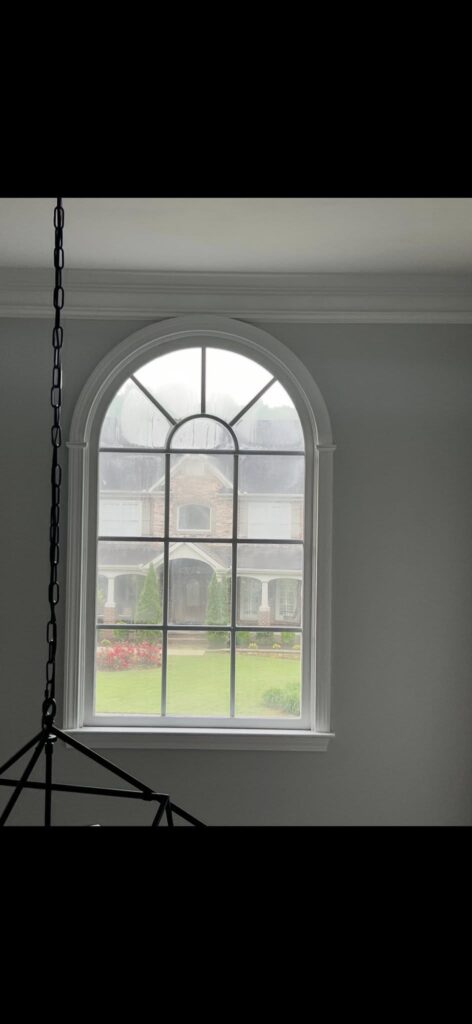
A double-pane window has two sheets of glass with a sealed space between them. That space is filled with an insulating gas, usually argon, and the edges are locked together with a spacer and a seal. The whole assembly acts as one unit.
The gas layer is what does the work. Heat moves easily through a single sheet of glass, which is why a single-pane window feels hot to the touch on a Georgia afternoon and cold in January. The trapped gas between two panes slows that transfer down dramatically. Add a low-E coating, which is a nearly invisible layer that reflects heat, and you keep summer heat outside while letting daylight through.
This is the number one reason people search for double-pane window help. You clean the inside, you clean the outside, and the haze is still there because it is inside the glass. What has happened is that the seal around the edge has failed. Moisture got in and the insulating gas got out.
Here is the part that matters. A fogged window is not just ugly. Once the gas has escaped, the window has lost most of its insulating value and is now performing close to a single sheet of glass, while you keep paying to heat and cool the room. The fog is the visible symptom. The energy loss is the real cost.
Every fogged or single-pane window in your house is quietly adding to your power bill every single month, and the water collecting on those sills is working on the wood underneath. Neither problem gets cheaper by waiting.
Let us look at your windows and tell you honestly whether you need new glass or new windows, and what each one costs.
Call (943) 678-1657 or book online. Open Monday to Saturday, 7:00 AM to 5:30 PM.